
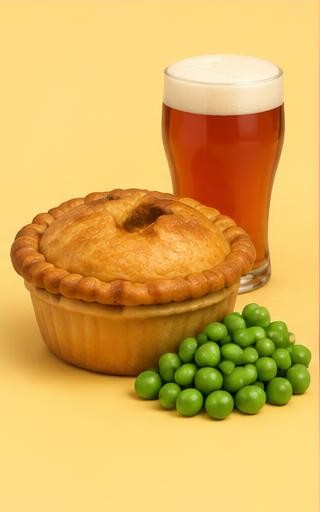
British classics and pints
Twelve questions on british classics and pints. Look closely: the most familiar answer is not always the right one.
Free to use with your own team, courtesy of WorkplaceHero - workplacehero.co.uk
Question sheet
- 1. Which fish traditionally gives Cullen skink its smoky flavour?
- A. Smoked trout
- B. Smoked salmon
- C. Smoked haddock
- D. Smoked mackerel
- 2. What distinguishes the appearance of a traditional Cornish stargazy pie?
- A. Whole eggs balanced on the crust
- B. A spiral of pastry sausages
- C. A lattice of seaweed
- D. Fish heads protruding through the crust
- 3. A Teesside chicken parmo is traditionally topped with which sauce before cheese is added?
- A. Hollandaise
- B. Béchamel
- C. Tomato sauce
- D. Peppercorn sauce
- 4. Which British speciality is made principally from cooked laver seaweed?
- A. Pease pudding
- B. Pan haggerty
- C. Rumbledethumps
- D. Laverbread
- 5. Arbroath smokies are traditionally prepared using which method?
- A. Hot-smoking haddock
- B. Cold-smoking salmon
- C. Air-drying herring
- D. Salt-curing cod
- 6. Which city is particularly associated with the meat-and-vegetable stew called scouse?
- A. Plymouth
- B. Bristol
- C. Newcastle
- D. Liverpool
- 7. What is unusual about the traditional filling arrangement of a Bedfordshire clanger?
- A. It contains a whole unpeeled onion
- B. It contains three different cheeses
- C. It has savoury and sweet sections
- D. Its filling is added after baking
- 8. Which ingredient makes traditional Glamorgan sausages different from meat sausages?
- A. Smoked haddock
- B. Pearl barley
- C. Cheese
- D. Black pudding
- 9. What remains alive in cask-conditioned beer and helps it develop condition in the cellar?
- A. Barley embryos
- B. Yeast
- C. Hop flowers
- D. Acetic acid bacteria
- 10. According to CAMRA's description, cask-conditioned beer is served without which intervention?
- A. Any period of cellar storage
- B. Any contact with air
- C. Use of a tap or handpump
- D. Injection of carbon dioxide gas
- 11. Why are finings added during the production of some beers?
- A. To darken pale malt
- B. To improve clarity
- C. To increase alcoholic strength
- D. To create hop bitterness
- 12. Traditional isinglass finings are derived from which animal material?
- A. Eggshells
- B. Fish swim bladders
- C. Sheep's wool
- D. Beeswax
Team answer sheet
British classics and pints
Team name
Date
Write the letter or your answer beside each question.
- 1.
- 2.
- 3.
- 4.
- 5.
- 6.
- 7.
- 8.
- 9.
- 10.
- 11.
- 12.
Total score / 12
Answer key (for the quizmaster)
- 1. C - Smoked haddockCullen skink combines smoked haddock with potatoes, onion and milk.
- 2. D - Fish heads protruding through the crustThe fish heads point upwards through the pastry, giving the pie its name.
- 3. B - BéchamelThe breaded chicken is topped with béchamel and cheese, then grilled.
- 4. D - LaverbreadDespite its name, Welsh laverbread is prepared seaweed rather than a loaf.
- 5. A - Hot-smoking haddockArbroath smokies are haddock cooked by hot-smoking.
- 6. D - LiverpoolScouse is strongly associated with Liverpool and gave rise to the nickname Scouser.
- 7. C - It has savoury and sweet sectionsA traditional clanger can contain a savoury filling at one end and a sweet filling at the other.
- 8. C - CheeseGlamorgan sausages are a meat-free speciality based on cheese, breadcrumbs and leeks.
- 9. B - YeastLive yeast allows further conditioning after the beer has entered the cask.
- 10. D - Injection of carbon dioxide gasIts carbonation develops naturally rather than being supplied by injected carbon dioxide.
- 11. B - To improve clarityFinings help suspended material settle, producing the intended clarity.
- 12. B - Fish swim bladdersIsinglass is a collagen-based fining traditionally obtained from fish swim bladders.